

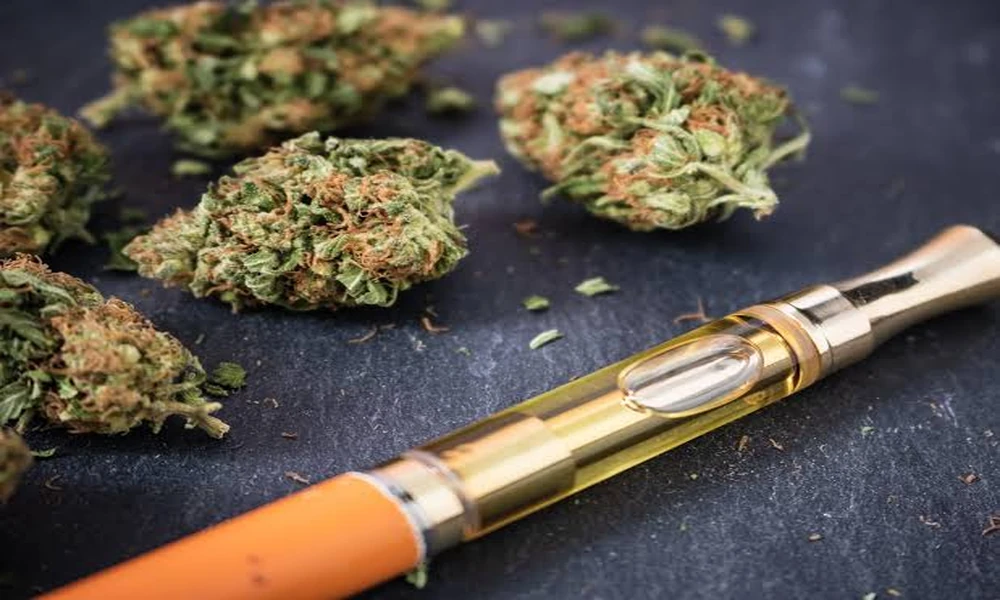
Vape cartridges clog more frequently in cold weather than at any other time of year, and the reason is straightforward. Oil thickens when the temperature drops. Exhale Wellness cartridges rely on oil moving through narrow internal channels toward the heating element, and that movement slows significantly once the temperature falls below what the oil was formulated to handle at optimal viscosity. The clog is not a product defect. It is a physical response to environmental conditions, and it resolves with the right intervention.
Why does cold thicken oil?
Cannabis and hemp extract oils are viscous at room temperature and become considerably thicker as the temperature decreases. The internal channels and wick structures inside a 510 cartridge are narrow by design, sized for oil at the viscosity it carries in standard room temperature conditions. When oil thickens past the point where it moves freely through those channels, airflow pulls through without drawing oil toward the heating element. The device fires but produces little or no vapour because the oil supply is not reaching the coil surface.
Live resin oil is more susceptible to cold thickening than distillate because its broader compound profile includes terpene content that changes viscosity more dramatically across temperature shifts. Distillate-based cartridges are more stable in cold conditions, but still experience flow restriction at sufficiently low temperatures.
Clearing a cold-weather clog
Warming the cartridge is the primary fix and the one that works across the widest range of cold-weather clog scenarios.
- Holding the cartridge in a closed fist for two to three minutes transfers body heat to the oil and reduces viscosity enough to restore flow in most cases.
- Placing the cartridge in a pocket close to the body for five to ten minutes before attempting a draw achieves the same result with less active effort.
- Taking a slow, gentle draw without firing the battery first clears loose condensate from the airflow channel before the heating element activates.
- Firing the battery on the lowest available voltage setting for a brief moment before taking a full draw warms the oil at the coil surface without scorching it.
None of these interventions requires tools or hardware adjustment. They address the temperature variable directly rather than the cartridge itself.
Preventing recurrence
Storage temperature is the most controllable variable in cold-weather cart performance. Cartridges kept at room temperature before use, rather than carried in an outer pocket or left in a cold vehicle, arrive at the heating element in a state closer to optimal viscosity. The draw that produces a clog on a cold cartridge often flows freely once the same cartridge has been at room temperature for 15 minutes.
Upright storage with the mouthpiece facing upward keeps oil positioned above the heating element rather than pooled around it, which reduces the condensate accumulation that compounds cold-weather flow restriction. Condensate that collects in the airflow channel during cold sessions adds a second layer of resistance on top of the viscosity issue and makes the clog harder to clear than either factor alone would produce.
Winter cart performance does not require a different device or a different product. Consistent room temperature storage before use and low voltage warming draws when restriction occurs address the underlying cause without any additional hardware or product adjustment needed.
