

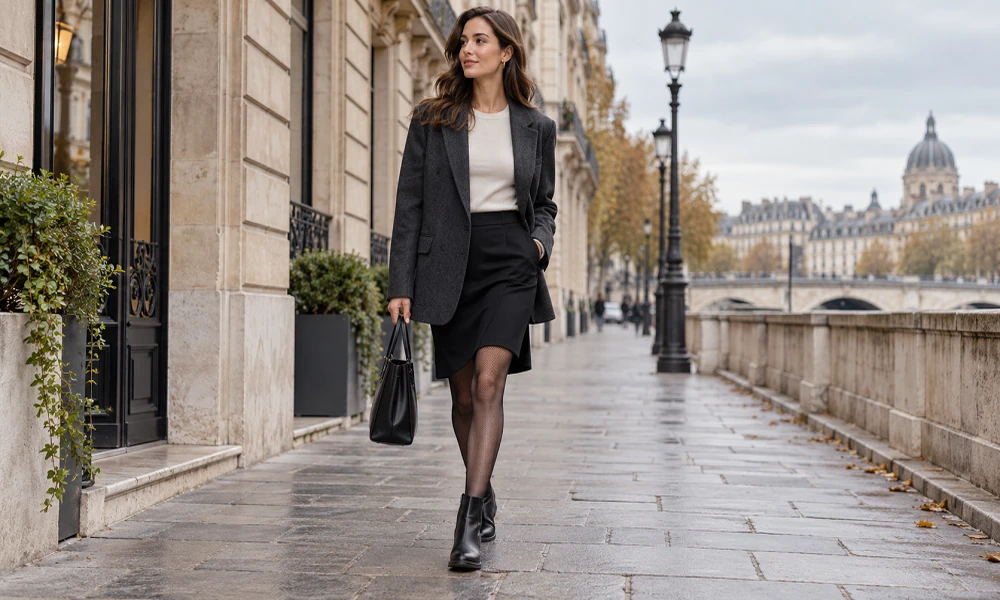
A sheer layer beneath a blazer. Fishnets below a familiar skirt. A sharply cut jacket worn with loose denim. Alternative fashion becomes easier to wear when its strongest details meet clothes already hanging in the wardrobe. The interest lies in that mix: something unexpected against something reassuringly ordinary.
The journey between runway and street also works in both directions. Designers interpret ideas associated with music, nightlife and subcultures, while wearers reshape those ideas around daily life. An outfit needs to survive the walk to the station, lunch with friends and a change in weather. That is where experimentation becomes a personal style.
The Rebellious Roots Still Matter
Alternative dressing has a history beyond seasonal trend reports. The V&A’s account of Vivienne Westwood’s punk fashion legacy traces a career that connected youth culture with experimental fashion, later embracing corsets as outerwear and reworked tailoring. These references help explain why tension between formal and unconventional clothing remains so compelling.
For an everyday wardrobe, the useful lesson is contrast. A polished shirt can give distressed denim a different character. A delicate skirt can soften the weight of sturdy boots. Keeping those differences visible lets an outfit retain some of its original energy without demanding a complete change of identity.
Sheer Layers Find an Everyday Setting
Transparency offers a clear example of experimental styling reaching the street. Vogue’s coverage of sheer street style in Copenhagen highlighted the look during the spring 2027 shows, including ways to combine transparent garments with solid layers. The coverage points to adaptation through layering, rather than a single prescribed level of exposure.
One practical interpretation is a mesh top over an opaque vest, finished with relaxed trousers. Another is a sheer overskirt layered over a simple, fully lined skirt. In both cases, transparency creates depth while the base layer provides the coverage the wearer prefers.
Texture deserves attention here. A fine, fluid mesh produces a different effect from a stiff net fabric. Checking how the layers move together can matter more than copying the colours of a photographed outfit.
Fishnets Add an Eye-Catching Detail
Fishnet hosiery offers a smaller way to explore the same idea. It introduces a visible pattern without requiring an entirely new silhouette. A plain dress or an opaque denim skirt can provide enough structure for the netting to become the main detail.
For shoppers exploring fishnet tights, Dutch lingerie retailer LekkerStout offers a collection ranging from fine and coarse fishnets to designs with additional patterns. Alongside classic black, there are also coloured options, making it easier to match the style to different outfits and occasions.
A suggested daytime combination is fine black netting with a knee-length skirt, a soft knit and ankle boots. For a bolder interpretation, wider netting can sit beneath an uncomplicated black dress. Keeping the surrounding fabrics relatively plain makes the pattern easier to read.
Before choosing, check the individual product’s construction and sizing information. Tights, stockings and suspender-look styles can require different outfit planning, even when their patterns appear similar in a photograph.
Bold Proportions Need a Point of Focus
Exaggerated shapes offer another route into runway-inspired dressing. A broad jacket, long sleeve, or generous trouser leg changes the outline of familiar clothes. Translating that idea into daily wear starts with deciding where the volume belongs.
Try an oversized blazer with a simple fitted top and straight trousers. Alternatively, let wide trousers carry the shape and keep the upper half more compact. These are starting points, not fixed rules; the aim is to make each piece feel intentional alongside the others.
Movement is a useful test. Sit down, reach forward, and walk in the complete outfit. Sleeves that interfere with a bag strap or hems that catch under shoes can quickly turn an appealing silhouette into a distraction.
Build Around Clothes That Already Work
An accessible approach begins with an outfit the wearer already enjoys. Change one element: replace plain hosiery with a net pattern, add a transparent layer or introduce a stronger shoulder. Then consider whether the result still suits the day ahead.
Repeating one colour can help connect contrasting materials. Black boots can echo black netting, while a cream knit can bring softness to darker separates. There is room for individuality without every garment competing for attention.
Accessories can stay familiar during that first experiment. An everyday shoulder bag and favourite earrings keep the outfit connected to the person wearing it. Once the new combination feels natural, further changes become easier to judge.
The most convincing runway-to-street translation feels comfortable enough to wear again. Explore LekkerStout’s fishnet collection and choose one detail that gives a familiar outfit a fresh direction.